
Summarize with
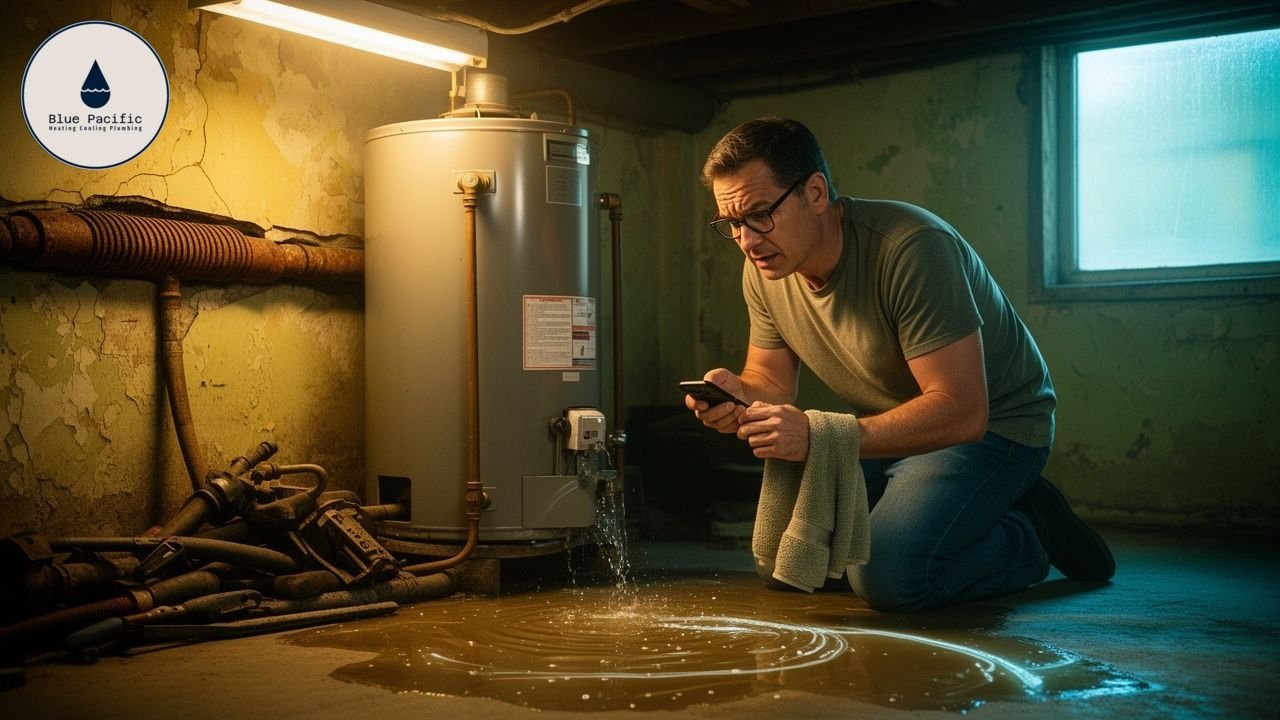
Homeowners facing an emergency water heater leak must immediately turn off the power or gas supply and shut off the main water valve leading to the tank. These two actions stop the heating process and prevent more water from flooding the home. If the unit is electric, flip the corresponding switch in the circuit breaker box. If it is gas, turn the dial on the thermostat to the off position. Next, close the cold-water shut-off valve, typically located on the pipe entering the top of the tank, by turning it clockwise.
Managing a leaking hot water heater requires fast action to prevent structural damage and mold growth. This guide explains the necessary steps for stabilization, how to identify the source of the leak, and when to contact an emergency plumber Falmouth residents trust for repairs. Following these procedures reduces the risk of expensive property damage and ensures safety for everyone in the household.
Immediate Steps to Stabilize an Emergency Water Heater Leak
Safety is the first priority when a water heater starts leaking. If water has pooled around the base of an electric unit, do not touch the tank or the water until the power is off at the breaker. Standing water and electricity create a severe shock hazard. For gas units, if a smell of rotten eggs accompanies the leak, leave the house immediately and contact the gas company, as this indicates a gas leak.
Once the energy source is secure, stopping the water flow is the next objective. Most tanks have a dedicated shut-off valve on the cold-water inlet pipe. If this valve is stuck or leaking, turn off the main water supply for the entire house. This stops the pressure that forces water out of the leak point. After the water is off, open a hot water faucet elsewhere in the home to relieve pressure and allow the tank to drain more effectively if needed.
A study by the Insurance Institute for Business & Home Safety shows that water heater failures are a leading cause of residential water damage. Acting within the first few minutes can mean the difference between a small cleanup and a total basement renovation.
Identifying Common Leak Locations and Causes
Finding the exact spot where water escapes helps determine if the unit needs a simple fix or a total replacement. Not all puddles mean the tank is ruined. Some leaks occur at connection points that a professional emergency plumber in Falmouth can tighten or replace quickly.
Leaks From the Top of the Tank
Water pooling on top of the heater often stems from loose pipe connections or a failing cold-water inlet or hot-water outlet pipe. It might also indicate a problem with the Temperature and Pressure (T&P) relief valve. If the T&P valve is leaking, it may be doing its job by releasing excess pressure, or it may have failed due to age.
Water Heater Leaking From Bottom
A water heater leaking from the bottom usually signals a more serious issue. This often happens because sediment has collected at the bottom of the tank over several years. This sediment creates a layer of insulation that causes the burner to overheat the bottom of the tank, eventually leading to cracks in the glass lining. Once the internal tank shell is breached, repair is usually impossible, and the unit must be replaced.
Leaking Hot Water Heater Causes
Several factors lead to tank failure in coastal areas like Falmouth. High humidity and salt air can speed up the oxidation of metal components. Additionally, sediment buildup from local water sources can lead to internal corrosion. According to the International Association of Certified Home Architects, the average life expectancy of a water heater is about 10 years. If the unit has reached this point, replacement is usually the more practical long-term move see our water heater replacement cost guide for Falmouth to understand current pricing.
Understanding Safety Risks and Danger Levels
A leaking water heater is more than a mess; it can be a safety risk. Homeowners should understand why a leaking hot water heater may present a dangerous situation.
- Scalding Hazards: Water inside the tank is often 120 to 140 degrees Fahrenheit. A sudden burst of a water heater emergency can spray boiling water, causing severe burns.
- Structural Damage: Constant moisture weakens floor joists and supports. Over time, a heavy, full water heater can even fall through a weakened floor.
- Mold and Mildew: Standing water in a basement or utility closet provides the perfect environment for mold. This can happen within 24 to 48 hours of the initial leak.
- Explosion Risk: If the T&P valve is blocked or malfunctioning while the heater continues to run, internal pressure can build until the tank explodes. This is why turning off the energy source is the very first step.
Bonus Tip: Check the age of the unit by looking at the serial number on the manufacturer’s sticker. The first four digits usually represent the month and year of manufacture. If the unit is over 12 years old, skip the repair and prepare for a replacement.
Comparing Leak Severity and Required Actions
|
Leak Location |
Severity Level |
Common Cause |
Likely Solution |
|---|---|---|---|
|
T&P Relief Valve |
Medium |
Excess pressure or valve failure |
Replace the valve or adjust the pressure |
|
Drain Valve |
Low |
Loose fit or debris in the valve |
Flush the tank or replace the plastic valve |
|
Top Pipe Fittings |
Low |
Loose connections or worn tape |
Tighten or replace pipe nipples |
|
Bottom of Tank |
High |
Internal corrosion or sediment |
Complete tank replacement |
|
Gas Control Valve |
High |
Mechanical failure or rust |
Immediate professional repair |
Once you’ve decided a full replacement is the right call, our water heater installation guide walks through what the process involves.
Managing the Cleanup and Drainage Process
After turning off the water and power, the tank still contains 30 to 80 gallons of water. If the leak is significant, draining the tank is necessary to stop the flow. Attach a standard garden hose to the drain valve at the base of the heater. Run the other end of the hose to a floor drain or outside.
Open the drain valve by turning the handle or using a flathead screwdriver. To help the water flow, open the T&P relief valve or a hot water faucet upstairs to let air into the system. This prevents a vacuum from forming and speeds up the drainage.
In Falmouth, local water may have varying mineral content. Data from the United States Geological Survey indicates that mineral accumulation, or hard water, can lead to faster sediment buildup in water heating systems. Regular flushing can prevent this, but during an emergency, the goal is simply to empty the tank as safely as possible.
Things to Consider Before Making a Decision
When deciding how to handle a water heater repair in Falmouth, homeowners should evaluate several factors.
First, consider the cost. If a repair costs more than 50% of the price of a new unit, replacement is usually the better financial choice. Second, look at the efficiency ratings. Newer models use significantly less energy. The Department of Energy notes that water heating is the second largest energy expense in most homes, so a more efficient tank pays for itself over time.
Finally, check the warranty. Many tanks have 6-, 9-, or 12-year warranties. If the unit is still covered, the manufacturer might provide a replacement tank at no cost, though labor for a local emergency plumber will likely still be an out-of-pocket expense. If you’re replacing the unit regardless, it’s worth comparing your options first see our tank vs tankless water heater guide before choosing a replacement.
Bonus Tip: If the leak is coming from the T&P valve, check the home’s water pressure. High home water pressure (above 80 psi) can cause the valve to leak even if the heater is working perfectly. Installing a pressure-reducing valve might solve the problem.
Common Questions About Water Heater Leaks
How long can I wait to fix a small leak?
A small leak can turn into a burst water-heater emergency without warning. Even a slow drip can cause mold or rot. It is best to address any visible moisture immediately to avoid larger restoration costs.
Can a leaking water heater cause a fire?
Yes. If water leaks onto the electrical components of an electric heater or the gas burner assembly of a gas unit, it can cause a short circuit or prevent the gas from burning cleanly. This creates fire risks or carbon monoxide hazards.
Is a leaking water heater an emergency?
If the leak is continuous and cannot be contained in a small bucket, it is an emergency. Any leak from the bottom of the tank is also an emergency because it indicates the tank structure is failing.
Why is my water heater leaking from the bottom?
This usually happens because the internal steel tank has rusted through. This is common in older units where the sacrificial anode rod has been completely consumed. Once the tank rusts, it cannot be patched or welded.
What are the signs of water heater failure?
Common signs include popping or rumbling noises, which indicate sediment buildup. Rusty-colored water, a metallic taste, or moisture around the base of the unit are also clear warnings that the system is failing.
Should I call an emergency plumber or wait for business hours?
If you can successfully shut off the water and power and the leaking stops, you can likely wait until the next morning. However, if the water won’t shut off or you have no other way to get water to the rest of the house, call an emergency plumber in Falmouth immediately.
Is a leaking water heater dangerous if it’s gas?
It can be. If the leak puts out the pilot light but the gas stays on, gas can build up in the room. Furthermore, if the leak is caused by high pressure, there is a risk of the tank bursting.
Summary of Emergency Procedures
When a water heater fails, the most effective response is to isolate the unit from its power and water sources. Turn off the electricity at the breaker or the gas at the valve. Close the cold-water supply line. Drain the tank if the leak continues to cause damage. By identifying whether the leak is a simple loose fitting or a catastrophic tank failure, homeowners can make informed decisions about repairs. Evaluate the age of the unit and the cost of parts before committing to a fix. For any situation involving standing water or gas odors, professional help is necessary to ensure the home remains safe and dry.
Blue Pacific Cape Cod Assistance
For residents in Falmouth needing urgent water heater repair service, Blue Pacific Cape Cod offers expert guidance on water heater issues. For immediate support or to discuss repair options, call (508) 274-9939. Homeowners can also send photos of their units or questions to BluePacificCapeCod@gmail.com to get more information. Handling an emergency water heater leak quickly prevents small drips from becoming expensive home disasters.
Sources
- Department of Energy – Information regarding the energy consumption and costs of home water heating systems.
- International Association of Certified Home Inspectors – A technical guide on the life expectancy of various home appliances and systems.
- United States Geological Survey – Scientific data explaining water hardness and its effects on plumbing and appliances.