
Summarize with
Snaking clears a path through a clog. Hydro jetting scours the entire wall of the pipe, removing whatever caused the clog to form in the first place. That is the real answer to hydro jetting vs snaking, and it decides whether the fix lasts a few weeks or a few years.
Blue Pacific Cape Cod runs both as part of routine drain cleaning work across the Cape, and it matters more here than in most places: more than 85 percent of Cape Cod homes run on private septic systems rather than municipal sewer, which changes what should go down a drain and how often buildup becomes a real problem.
What Actually Separates the Two Methods
A drain snake, or auger, is a flexible steel cable with a cutting head. A plumber feeds it in until it hits the blockage, then hooks the material back out or grinds a hole through it. Either way, water starts moving again.
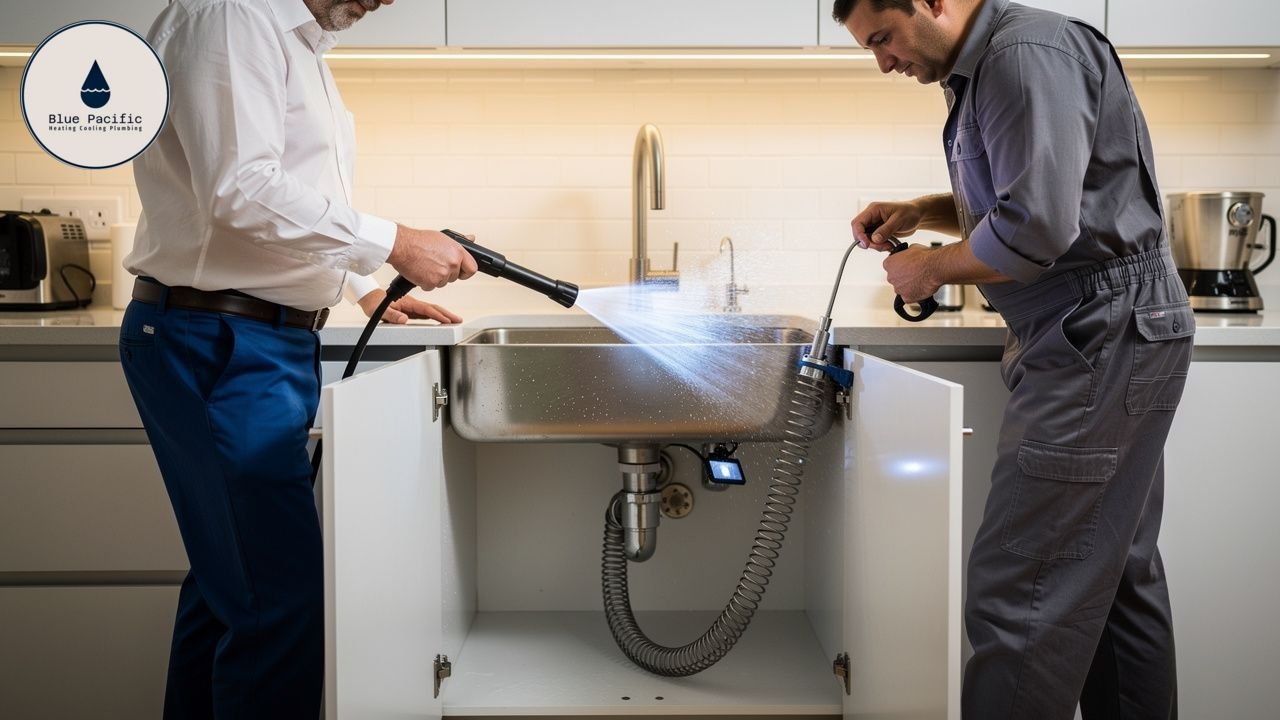
Hydro jetting sends water through a hose at 1,500 to 4,000 PSI, out of a nozzle that sprays backward as it’s pulled through the line. Instead of punching one hole through a clog, it strips grease, scale, and sludge off the entire pipe wall.
That’s the real difference between hydro jetting and snaking. Snaking opens a channel. Jetting cleans a surface.
What Snaking Does, and Where It Falls Short
Snaking is right for a single, localized blockage: hair wound around a bathroom drain, a toy in a toilet trap, a sock that made it further than it should have. It’s fast, needs no truck full of equipment, and on an old pipe puts less stress on the walls than jetting’s water pressure.
Where drain snaking vs hydro jetting actually matters is buildup. A snake bores through grease and scale without removing it. The hole reopens flow but the coating stays behind and is narrower than before, ready to catch the next thing that comes down the line.
That’s why the same kitchen line can get cleared every few months and clog again almost as fast. The tool didn’t fail. It was never built to remove buildup, only to punch through it.
What Hydro Jetting Does Differently
Hydro jetting is built for exactly the buildup a snake leaves behind: grease from a busy kitchen, mineral scale in older galvanized or cast iron pipe, and root intrusion where a line runs near a tree, which is most of Cape Cod.
A camera inspection usually comes first to locate the problem and confirm the pipe can take the pressure. Choosing hydro jetting or drain snake on an unfamiliar older line without that check is skipping the step that protects it.
The tradeoff is simple. Jetting costs more per visit and takes longer on site, but it resets the interval between clogs instead of reopening the same narrowing pipe. For a line that backs up on a predictable schedule, hydro jetting or snaking usually comes down to that pattern, and jetting is the better math even before the dollar figure.
Side by Side: How the Two Methods Compare
| Factor | Snaking | Hydro Jetting |
|---|---|---|
| What it does | Cuts or hooks through the clog | Scours the full pipe wall |
| Best for | A single, localized clog | Grease, scale, and root buildup |
| What it leaves behind | Grease film still on the walls | A clean interior surface |
| Recurring clogs | Often returns within weeks | Usually resets the interval |
| Root intrusion | Pushes through, does not clear it | Cuts and flushes the root mass |
| Older or fragile pipe | Lower risk without inspection | Needs a camera check first |
| Time on site | Often 30 to 60 minutes | Usually 1 to 2 hours |
| On a septic system | No effect on tank bacteria | No effect on tank bacteria |
| Relative cost | Lower per visit | Higher per visit, fewer repeat calls |
| Not appropriate when | Buildup is the root cause | The pipe has active structural failure |
Between these two drain cleaning methods, only one actually removes what caused the clog. If your drain has backed up more than once in the last year, that is the row that should decide your answer.
What Changes the Right Answer on Cape Cod
Two local facts matter here. First, a lot of the Cape’s housing stock predates modern plastic piping, so cast iron and clay lines show up more than in a newer inland subdivision. That is why a camera pass before jetting is not optional caution here; it is standard practice.
Second, most homes on the Cape run on septic, not sewer. The EPA recommends boiling water or a drain snake over chemical drain openers, since those chemicals kill the bacteria a septic tank needs to break down waste.
Neither snaking nor hydro jetting touches that bacteria, so both beat a bottle of chemical cleaner on a septic home. If your property sits in one of the areas the state has flagged under Title 5, that is a separate conversation about your system’s design, not about which drain cleaning method fixes a clog.
Which Method Fits Your Situation
Most calls about hydro jetting vs drain snaking come down to one of these five situations. Match yours below rather than guessing.
- One slow drain, no history of backups: snaking, and probably a DIY fix first, see below.
- A kitchen line that clogs every few months: hydro jetting, because grease is the cause and a snake will not remove it.
- Gurgling toilets or a slow floor drain near mature trees: likely root intrusion, jetting after a camera check.
- A pipe you already know is old, cracked, or partially collapsed: neither, until it is inspected. Forcing water or a cable through a failing section can turn a clog into a full pipe replacement.
- A brand new backup with no clog history yet: start with snaking. There is no reason to pay for hydro jetting or drain snake service beyond the basic call when the cause is this simple.
When You Don’t Need to Call Anyone Yet
A slow bathroom sink that gulps when plunged is usually just hair and soap scum. Try a cup plunger, then a slow pour of boiling water. A cheap hand auger clears it if that doesn’t. Skip chemical drain openers, especially on septic. If it comes back within a week, that’s when to call a professional instead.
Frequently Asked Questions
Can hydro jetting damage old pipes?
Yes, if the pipe is already cracked or has failing joints. A camera check first avoids that.
How long does hydro jetting take compared to snaking?
Snaking is usually 30 to 60 minutes. Jetting runs 1 to 2 hours depending on the line.
Will snaking get rid of tree roots for good?
No. It cuts through the roots but they regrow. Jetting clears more and lasts longer.
Is hydro jetting safe for a home on septic?
Yes. It cleans the pipe, not the tank. Chemical drain cleaners are the real septic risk.
How often should a sewer line be hydro jetted?
Yearly for a heavy-use kitchen, every 18 to 24 months for root-prone lines, less if neither applies.
Can I rent a drain snake and do this myself?
Yes, for one accessible clog. Beyond that, or if it keeps returning, get it inspected.
Ready to Fix It for Good?
If your drain keeps coming back to the same problem, get a camera on it before you guess again.
Call Blue Pacific Cape Cod at (508) 274-9939 or email BluePacificCapeCod@gmail.com, and we will tell you plainly which method your line actually needs.
Sources
U.S. EPA, “How to Care for Your Septic System.” Supports the recommendation to use boiling water or a drain snake instead of chemical drain openers on a septic system.
Barnstable County (MASSTC), “Title 5 Factsheet.” Source for the figure that more than 85 percent of Cape Cod homes use septic systems.