

Summarize with
Winter has a way of exposing every weak spot in a heating system. One cold snap and the pipes start knocking, the pilot light won’t hold, and you’re standing in the basement deciding whether to call for a fix or start pricing a new unit. That’s the moment most homeowners start searching for boiler repair services, and there’s no single right answer waiting for them.
The U.S. Department of Energy’s ENERGY STAR program reports that certified gas boilers now reach 90% annual fuel efficiency, about 6% higher than the federal minimum, which is one reason an old, struggling unit deserves a second look before another repair.
At Blue Pacific Cape Cod, we field this exact question from homeowners across Falmouth almost every week once the weather turns. Here’s how we actually think it through.
Is It Better to Repair or Replace Your Boiler?
Age is the first thing worth checking, but it’s not the only thing. A five year old boiler with a broken circulator pump gets a repair almost every time. An eighteen year old boiler with that same broken pump is a different conversation entirely, because a part is never really just a part once a system is that old.
Repair frequency matters too, and so does what your last few heating bills actually looked like. Most technicians offering boiler repair services won’t talk you into replacing something that just needs one fix, and if yours does, get a second opinion.
The Boiler Repair vs Replacement Difference
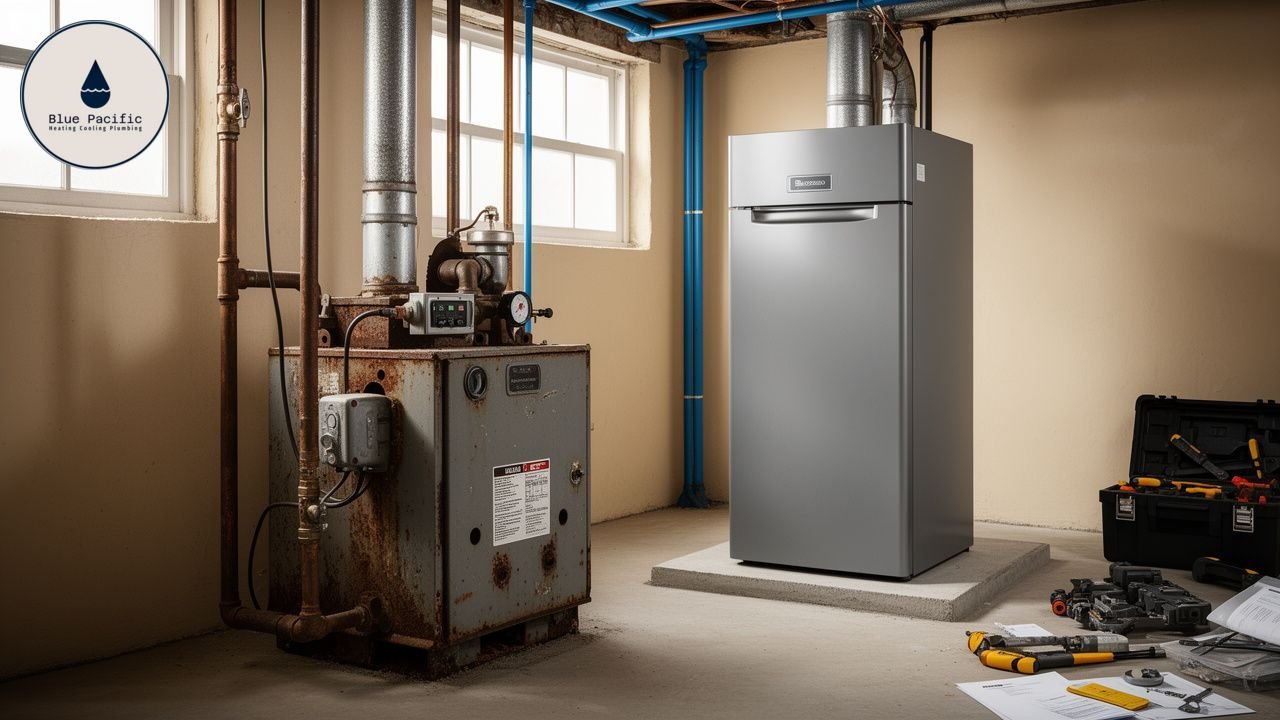
The boiler repair vs Boiler Replacement difference comes down to scope more than anything else. Fixing something answers today’s problem. Replacing it resets the clock on the whole system, and that starts to carry real weight once a boiler crosses ten years old. If you’re also deciding between different heating systems altogether, our guide on Heat Pump vs Boiler which Heating System Is Best for Massachusetts Homes? can help you understand which option best fits your home and energy needs.
Repair means swapping one failed part, a valve, a sensor, an igniter, while the rest of the system carries on as before. Replacement pulls the whole unit and puts in a new one, updated venting and controls included, typically with a real jump in efficiency.
How to Know If Your Boiler Is Failing
Boilers rarely die without warning signs first. They complain for weeks, sometimes months, before anything actually breaks. How to know if your boiler is failing comes down to catching the small stuff early, before it turns into a cold house on a Tuesday morning in February.
Warning Signs You Shouldn’t Ignore
A few give it away. Radiators that heat unevenly, hot on top and cold at the bottom. A pilot flame that’s gone yellow or orange instead of the steady blue it should be. Banging or gurgling from inside the tank. Water collecting near the base. We cover these in more depth in our guide to common boiler problems that should never be ignored. A heating bill creeping up with no change in how you’re running the system. And if a carbon monoxide detector near the unit ever starts chirping, treat that differently than the rest of this list.
The CPSC’s carbon monoxide fact sheet puts heating systems among the top sources of non fire carbon monoxide deaths nationwide, and more than 200 people die from malfunctioning fuel burning appliances every year. If that alarm goes off near your boiler, skip the troubleshooting entirely. Call for licensed boiler repair services and get it checked before you go back to bed.
When Should You Repair a Boiler?
When should you repair a boiler instead of replacing it? Roughly speaking, when it’s still within the first half of its expected lifespan and the problem in front of you is isolated, not part of a pattern. A technician pointing to one clear cause, on a system that’s otherwise run fine, is a good sign to go ahead and fix it.
Boiler Issues That Can Often Be Repaired
A miscalibrated thermostat. A failed pressure relief valve. A stuck zone valve, corroded wiring, a worn igniter. None of these are dramatic, and none of them cost much for a solid boiler repair services provider to sort out.
Sediment in the heat exchanger comes up a lot as well, and a flush handles it most of the time. A tank rusting from the inside is a separate issue, since rust has a habit of spreading well beyond where you first noticed it.
Signs You Need a New Boiler
Some problems simply don’t have a repair path worth taking. A cracked heat exchanger tops that list, and it’s one of the clearer signs you need a new boiler rather than another patch. It’s a safety hazard first, because a crack there can let combustion gases leak into the air inside your home, not just an inconvenience.
When Replacement Makes More Sense Than Another Repair
A few situations tend to point toward replacement. Your boiler is past 15 years old and the repair quote already runs more than half the price of a new installed unit. Maybe you’ve called for repairs two or three times in the last couple of years, a pattern technicians sometimes call a repair spiral, since fixing one part just exposes whatever fails next.
None of these signs show up alone very often. Two or three at once is your cue to get a real replacement quote instead of paying for another patch job.
How Long Does a Boiler Last?
Fifteen to twenty years covers most residential gas boilers. Cast iron models can stretch to 20 or 30 years with the right upkeep. Combi boilers wear out faster, often somewhere in the 10 to 15 year range, since they carry the extra load of heating water on demand. How long does a boiler lasts in your specific case comes down to which type you have and how it’s been treated over the years.
What Affects Your Boiler’s Lifespan?
Water quality matters more than most homeowners assume. Hard water leaves mineral deposits inside the heat exchanger, and the unit has to work harder to produce the same heat output. Installation quality is right up there with it.
A boiler put in by an inexperienced crew rarely reaches its rated lifespan, no matter what brand name is stamped on the front. Annual servicing, proper venting, and steady water pressure are what actually stretch a unit toward the 20 year mark instead of the 10 year one.
Boiler Replacement Cost vs Repair Cost
The boiler replacement cost vs repair cost math starts to shift once a boiler is over ten years old and a single repair no longer looks small. The numbers here settle a lot of arguments. A new circulator pump or a replaced sensor runs a few hundred dollars. A major component failure can run into the thousands. A full boiler replacement typically falls between $4,000 and $10,000, depending on unit size, fuel type, and how complicated the install turns out to be.
Units under ten years old with an isolated issue lean toward repair. Units past fifteen years, particularly ones with a rusted tank or a cracked exchanger, lean toward replacement, partly because a new install resets the manufacturer’s warranty and brings a 20 to 30% efficiency gain an old unit can’t match. We walk every customer through that math before they commit either way.
HVAC contractors often rely on a simple guideline, the 50 percent rule: if a repair costs more than half of what a new system would run, replacement is the better financial move. It’s held up over the years. It’s also the first thing we check when someone calls asking about boiler repair services for a unit that’s clearly on its way out.
Which Option Delivers Better Long Term Value?
A repair is cheaper right now. A replacement is cheaper across the next decade, once efficiency gains enter the picture. ENERGY STAR certified gas boilers save homeowners roughly $780 over the life of the unit compared with standard models, and that figure doesn’t even include the emergency calls you’ll likely avoid along the way. For an aging system, the math leans toward replacement more often than homeowners expect, even with a steeper upfront cost.
What to Consider Before Replacing Your Boiler
Get a second opinion if a quote feels off, and ask about warranty terms while you’re at it. Confirm that your home’s heating load actually matches the size of the unit being proposed.
Both oversized and undersized boilers cause their own headaches down the line, short cycling on one end, weak heat during the coldest week of January on the other.
Repair History, Efficiency, and Heating Performance
The factors that affect boiler replacement decisions rarely come down to one dramatic failure. It’s a slower buildup of smaller issues finally tipping the scales.
Dig up your service records if you’ve kept any. Three or four repair visits in the last two years tell you something a single inspection never will. Check that history against your current AFUE rating, since anything under 80% counts as outdated by today’s standard, and pay attention to how evenly your home actually heats from room to room.
Why Professional Boiler Installation and Repair Services Matter
Getting boiler installation and repair services right the first time keeps homeowners from paying for the job twice, once to install it and again to fix what was missed. Licensed technicians earn their keep on exactly that point.
A boiler is not a weekend project. Cutting corners during installation shows up later as poor efficiency, uneven heat, or a safety issue that goes unnoticed until it’s serious. Proper venting, correct sizing, and code compliant wiring all come from hands on experience a manual can’t replace.
Restore Reliable Heat to Your Home
If you’re caught between fixing what you have and starting over, we’re glad to walk through it honestly. Our team at Blue Pacific Cape Cod has spent years providing boiler repair services to homeowners across Falmouth, and we’d rather give you a straight answer than a sales pitch. I’ll look at your system’s age, its repair history, and your actual heating needs before recommending anything.
Call us at (508) 274-9939 or email BluePacificCapeCod@gmail.com and we will provide you with customised assistance according to your requirements.
How often should a boiler be serviced?
Once a year, ideally right before the heating season starts in early fall. See our annual boiler maintenance guide for what that visit should include.
Is it worth repairing an old boiler?
Sometimes. A minor fix on a unit under ten years old is almost always worth it. Beyond that, the math starts to shift.
Can a boiler last 30 years?
Cast iron ones occasionally do, especially with clean water and consistent maintenance behind them, but that’s the exception rather than something to count on.
What’s the average lifespan of a home heating boiler?
Fifteen to twenty years for most units, though the type and the maintenance history can push that number either way.
Do new boilers really save money on energy bills?
Generally, yes. Newer units run more efficiently than models from a decade or two back, and that difference tends to show up in the winter heating bill.
Sources
- ENERGY STAR, U.S. Department of Energy: Federal certification data on boiler efficiency ratings, including AFUE benchmarks and lifetime energy savings for certified gas and oil units.
- U.S. Consumer Product Safety Commission: Carbon monoxide fact sheet detailing annual death and injury statistics tied to malfunctioning heating appliances.
- Centers for Disease Control and Prevention: National vital statistics data on unintentional carbon monoxide poisoning deaths by season and demographic group.