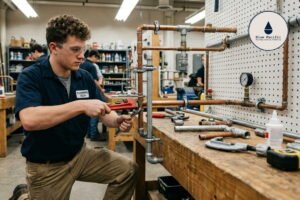

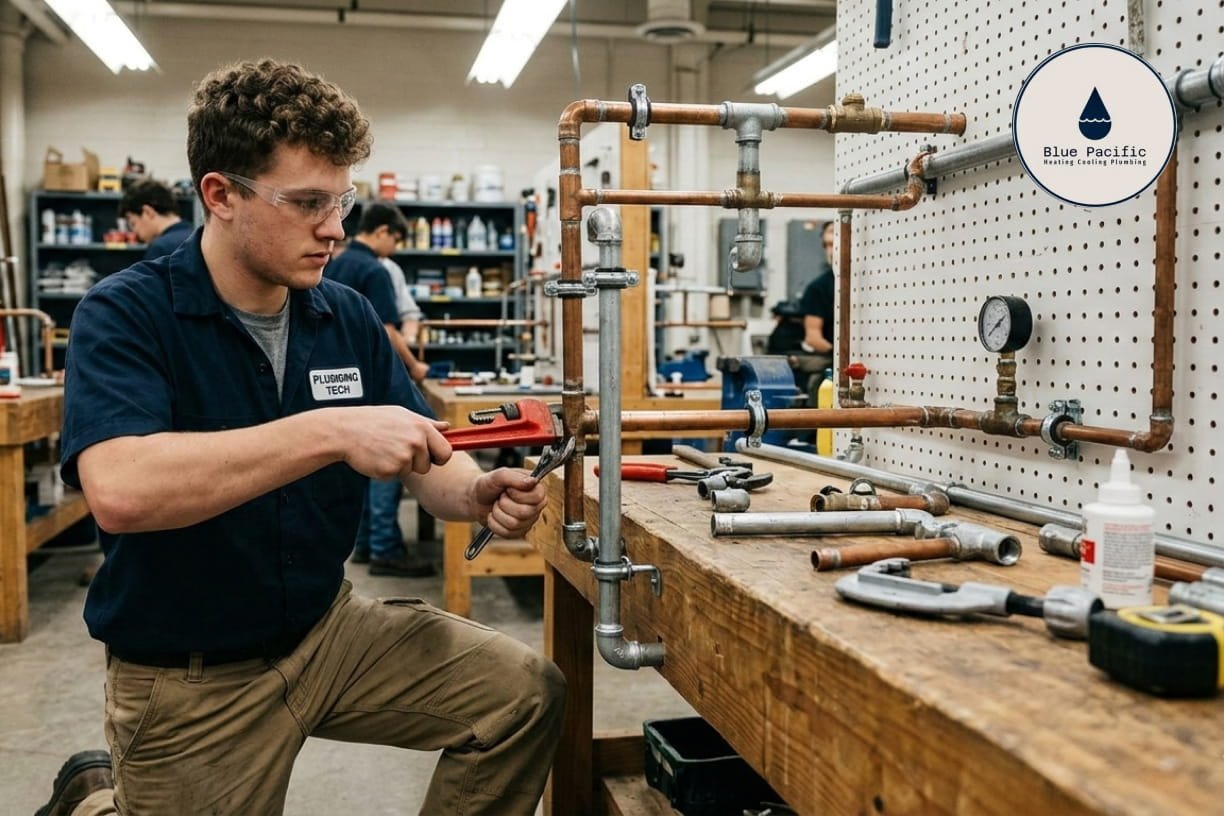
Becoming a licensed plumber typically takes between four and five years. This timeframe accounts for the combination of technical classroom instruction and the mandatory paid on-the-job training required by most states. The process generally begins with a high school diploma or equivalent, followed by an apprenticeship of similar duration, though some individuals choose to attend a trade school for six to twenty-four months before entering the field.
Aspiring professionals must complete roughly 8,000 to 10,000 hours of supervised work experience to qualify for a journeyman license. While the path is lengthy, it provides a direct route to a stable career with high earning potential without the debt often associated with a four-year university degree. Blue Pacific Cape Cod provides this detailed guide to help clarify the specific steps and time commitments involved in reaching professional licensure.
Primary Stages of the Plumbing Career Path
The timeline for this career depends heavily on the chosen entry point and local state regulations. Most people follow a structured path that moves from a student or helper role to an apprentice and finally to a licensed journeyman.
Education and Pre-apprenticeship Training
Many individuals start by enrolling in a vocational school or community college. These programs provide a foundation in blueprint reading, local plumbing codes, and safety protocols. Completing a certificate program can take six months to a year, while an associate degree takes two years. While not always mandatory, this formal education can sometimes count toward the total hours required for licensure.
Bonus Tip Check if local trade schools have partnerships with local unions or private companies. These connections often lead to immediate placement in an apprenticeship program after graduation.
The Apprenticeship Phase
The apprenticeship is the longest and most significant portion of the training. According to data from Apprenticeship.gov, a standard plumbing apprenticeship requires 2,000 hours of on-the-job training per year alongside at least 144 hours of related technical instruction. This phase usually lasts four to five years. During this time, apprentices earn a wage that increases as they gain skills.
| Stage | Estimated Duration | Core Focus |
|---|---|---|
| Pre-apprenticeship/Trade School | 6 Months to 2 Years | Basic theory, math, and safety |
| Apprenticeship (Years 1 and 2) | 2 Years | Residential repairs and basic installations |
| Apprenticeship (Years 3 and 4) | 2 Years | Commercial systems and complex diagnostics |
| Journeyman Licensing | Variable | Passing the state certification exam |
| Master Plumber Status | 2 to 10 Additional Years | Business management and advanced engineering |
Factors Affecting the Training Timeline
The exact number of years spent in training can fluctuate based on several variables. No two paths are identical, and external factors often dictate the speed of progression.
State and Local Regulations
Every state maintains its own licensing board with specific requirements. Some states may only require four years of experience, while others insist on five. For example, some regions allow trade school hours to replace one year of fieldwork, while others require all hours to be strictly hands-on.
Union versus Non-union Paths
Joining a union, such as the United Association, often involves a very rigid five-year program. These programs are highly structured and include guaranteed pay raises and comprehensive benefits. Non-union or “open shop” paths might allow for more flexibility in how quickly an apprentice completes their hours, but they may lack the standardized classroom components found in union tracks.
Part-time versus Full-time Commitment
The 8,000 to 10,000-hour requirement is based on full-time employment. Individuals working part-time or those who experience seasonal layoffs in construction may find that it takes six or seven years to accumulate the necessary hours for the journeyman exam.
The Licensing Exam Process
Once the required hours are documented and approved by the state board, the candidate must pass a comprehensive exam. This test evaluates knowledge of the Uniform Plumbing service, gas piping, venting, and drainage systems. Preparation for this exam can take several months of focused study. Successfully passing this test marks the official transition from an apprentice to a journeyman plumber.
Bonus Tip Keep a detailed logbook of all work hours from day one. Many state boards require proof of specific types of work, such as residential versus commercial, before they will approve an application for the licensing exam.
Market Outlook and Demand for Professionals
The career path offers significant stability due to the constant need for infrastructure maintenance and new construction. The Bureau of Labor Statistics indicates that employment for plumbers is projected to grow 2% through 2032. While this growth appears modest, the retirement of older professionals creates a high volume of openings for new entrants.
Data from the National Center for Construction Education and Research suggests that the skills gap in the trades remains a major factor in the industry. As more veteran plumbers retire, those who complete their training quickly find themselves in high demand.
Things to Consider Before Making a Decision
Before committing to a five-year training program, certain factors should be evaluated to ensure this career aligns with personal goals.
- Physical Demands: This work requires lifting heavy pipes, working in cramped spaces, and spending long hours on your feet.
- Mathematical Aptitude: Plumbers use algebra and geometry daily to calculate pipe angles, pressure drops, and flow rates.
- Schedule Flexibility: Emergency repairs often occur at night, on weekends, or during holidays, especially for those in service roles.
- Financial Stability: Apprentices earn while they learn, which eliminates the need for student loans, but starting wages are lower than journeyman rates.
- Long Term Goals: Some individuals prefer the hands-on work of a journeyman, while others aim to become a master plumber or start a business.
Common Questions About the Training Period
Many people ask if they can shorten the four-year timeline. While some accelerated programs exist, most state boards are strict about the hour requirements. Experience cannot be rushed because the variety of problems encountered in the field takes years to observe and resolve.
Another common question involves the cost of training. Unlike a traditional college path, many apprenticeships are sponsored by employers or unions, meaning the student pays very little for their education while receiving a steady paycheck.
Common Questions about Plumbing Careers
Can trade school replace an apprenticeship?
Trade school provides a head start and technical knowledge, but it rarely replaces the apprenticeship entirely. Most states require several thousand hours of actual field experience that a classroom cannot provide. Trade school usually counts for one year of the total four or five-year requirement.
Is the journeyman exam difficult?
The exam is challenging and covers complex codes and safety regulations. However, the four to five years of prior training are designed specifically to prepare candidates for this test. Most people who complete their hours and study the code books pass successfully.
What is the difference between a journeyman and a master plumber?
A journeyman can work independently on most projects. A master plumber usually has several more years of experience and has passed a more advanced exam. Master plumbers can pull permits, design complex systems, and own a plumbing business.
Do apprentices get paid?
Yes, apprentices are paid employees. They typically start at a percentage of a journeyman’s hourly rate and receive raises every six to twelve months as they progress through their training program.
Summary of the Journey
Becoming a plumber is a marathon rather than a sprint. The training period ensures that every licensed professional can protect public health by maintaining safe water and waste systems. By focusing on gaining diverse experience during the apprenticeship and staying current with local codes, an individual can build a career that lasts a lifetime. Evaluate personal interests in problem-solving and physical work before beginning this path. For those who enjoy working with their hands and solving technical puzzles, the time investment leads to a highly respected and stable profession.
Contact Information for Professional Services
If you live in the Cape Cod area and require expert plumbing assistance, Blue Pacific Cape Cod offers professional solutions for various residential and commercial needs. Whether it is a complex installation or a routine repair, the team is ready to help. You can reach the office by calling (508) 274-9939 or by emailing BluePacificCapeCod@gmail.com for more information. Blue Pacific Cape Cod maintains high standards of service to ensure every plumbing system operates safely and efficiently.
Sources
- Bureau of Labor Statistics – Provides official data on job outlook, median pay, and typical entry-level requirements for the plumbing profession.
- Apprenticeship.gov – Offers a breakdown of the federal standards for plumbing apprenticeship programs and hour requirements.
- National Center for Construction Education and Research – A professional organization that develops standardized training curricula and research for construction trades.